
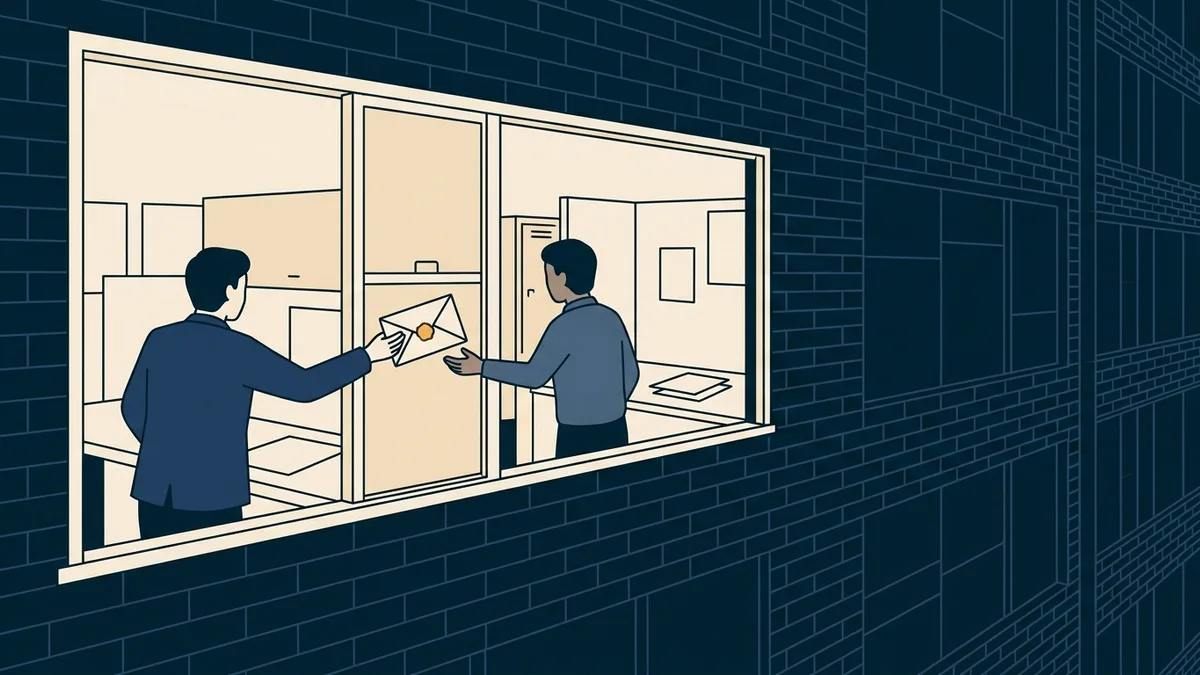
Primary source verification is confirmation of your existing license sent directly from the issuing board to the new board. You cannot supply it yourself, and processing times at the sending board are outside your control, so it should be requested before anything else.
Almost every stalled endorsement application we see is stalled on the same thing, and it is not the applicant's paperwork.
The mechanism
The receiving board needs proof that you hold the license you claim, that it is current, and that nothing is attached to it. That proof has to come directly from the board that issued it, which is what makes it primary source. A copy from your files, however genuine, does not satisfy the requirement, because the receiving board has no way to know it reflects your status today.
So you request verification from your existing board, pay its fee, and it transmits the record to the new one. Some boards do this within days. Others take six weeks, and a few still mail paper.
Why it sits on the critical path
The rest of an endorsement file is within your control. You complete the forms, pay the fee, schedule the fingerprinting, sit the jurisprudence exam if there is one. All of that can move as fast as you do.
Verification cannot. It depends on staffing and backlog at an office you have no relationship with and no leverage over, and it is frequently the last item to arrive in a file that is otherwise complete. Applicants routinely discover this in month two, having assumed it was a formality that would resolve itself.
Requesting it first
Request verification on day one, before the application itself if the receiving board allows. Check whether your issuing board uses an online request, a downloadable form or a third-party service, and whether it charges per destination.
If you are applying to several states, request all of them at once. The sending board is doing substantially the same work each time, and batching avoids discovering in March that you forgot the third state in January.
Then confirm receipt with the receiving board rather than assuming. Verifications do go astray, and a file waiting on a document that arrived and was misfiled looks identical, from your side, to one where the sending board never acted.
Complications worth anticipating
If you hold licenses in more than one state, most boards want verification from every one of them, including any that have lapsed. An old license you let expire a decade ago in a state you no longer think about still has to be verified, and applicants forget these constantly.
If your name has changed, the verification arrives under whatever name the sending board has on file. Update the record with the old board before requesting, or send documentation of the change with the new application, or the two files will not match and someone will have to sort it out by hand.
If your original board has been reorganized, and several have, the verifying authority may now be a different agency than the one that issued your license. Composite boards have absorbed standalone MFT boards in a number of states, and the successor agency holds the records.
What to do while you wait
Verification time is not dead time. Fingerprinting, the jurisprudence exam where one is required, transcript requests where the state still wants them, and the application form itself can all proceed in parallel.
The goal is to have every other element complete and on file so that the verification is genuinely the last thing to arrive rather than the first thing to be requested. Sequenced that way, a process that commonly runs three months can run closer to one.
Common questions
- Why will the board not accept my copy?
- Because a photocopy proves nothing about current status or discipline. Verification must travel board to board so the receiving state knows it has not been altered.
- How long does verification take?
- Anywhere from a few days to well over a month, depending on the sending board. It is the least predictable step in the process.
- Can I speed it up?
- Only by requesting it early and paying any expedite fee the sending board offers. Some boards use a third-party service that is faster than their own staff.
Need Help with Your Application?
We handle the MFT licensure process end-to-end — eligibility screening, documents, board follow-ups, and tracking.