
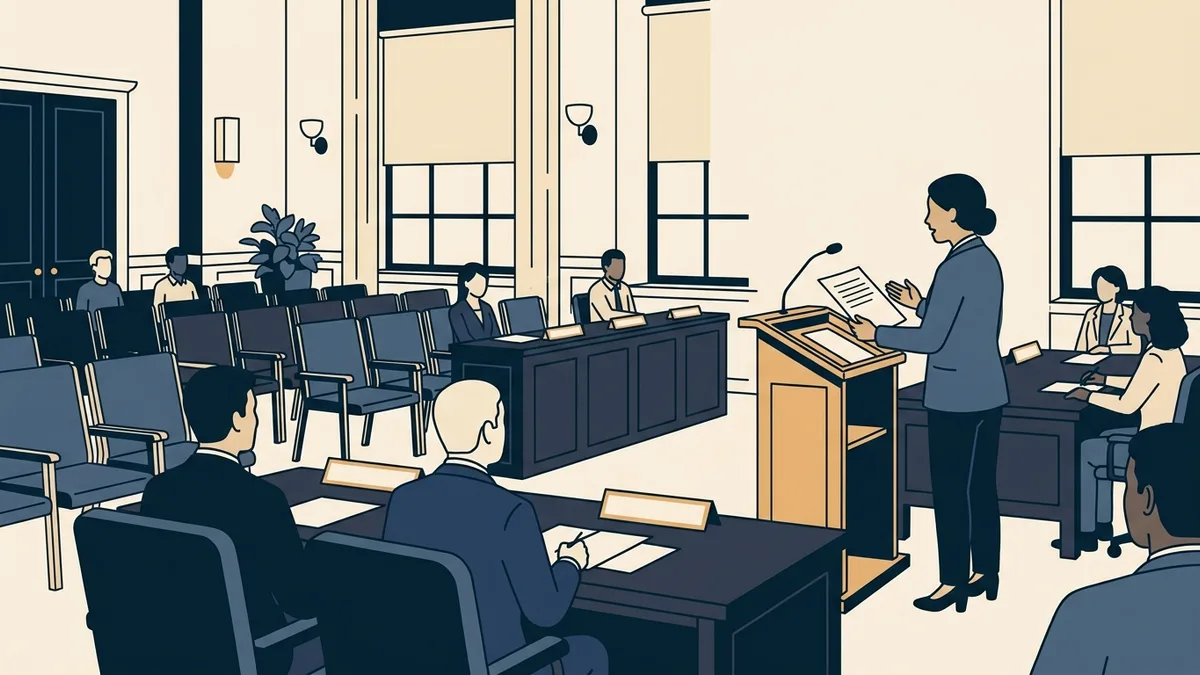
Watch the board's meeting calendar and posted agendas, and subscribe to its notices if a list exists. Proposed rules are published with a comment period, and written comments submitted before the deadline become part of the record. Specific, practice-based comments that suggest alternative language carry more weight than general objections.
Most practitioners learn about a rule change when a renewal form asks for something new. By then the change has usually been discussed at several public meetings, published for comment, and adopted. Following the process earlier takes less time than it sounds and gives you notice, and sometimes influence, well before anything takes effect.
Meetings run on a published calendar
Boards typically set a meeting schedule for the year and post it on their website. Open meeting laws in most states require advance public notice and an agenda, and many boards now stream meetings or allow remote attendance. Look for a page called meetings, board calendar, or public notices. If the board offers an email list, join it; that is the easiest way to see agendas when they are posted.
Reading an agenda for signals
Agendas are terse, so learn to read the items. A line referencing a committee report, a rules review, or a named rule section suggests drafting work in progress. Items on continuing education, supervision, telehealth, or endorsement deserve attention if you hold or plan to hold a license in that state. Meeting packets, when posted, often include draft rule text and staff memos that explain the reasoning. Minutes from earlier meetings show how long an item has been under discussion and which board members are driving it.
Listening to committees and workgroups
Much of the substantive work happens in smaller committees before anything reaches the full board. These meetings are often public too, with less formal agendas and more room for discussion. A practitioner who attends a committee meeting and offers a brief, specific observation about how a draft would work in practice may be heard at a stage where the language is still flexible.
Commenting during the formal period
When a board formally proposes a rule, it publishes notice with the text and a deadline for written comments, and often schedules a public hearing. The notice may appear on the board's site and in the state's official register of administrative rules. The process details, including how long the period runs, differ by state, so read the notice itself.
A useful comment identifies the section, describes the concrete effect on clients or clinicians, and offers alternative language. Comments that say only that a rule is burdensome are easy to set aside. Comments that show, for example, how a supervision documentation requirement would affect therapists licensed in several states give the board something to act on. Submit through the method in the notice and keep a copy.
Knowing where rules end and statutes begin
Boards can only adopt rules within the authority their practice act grants. Some changes, including adopting Access MFTs, require the legislature. Seventeen states have done that as of September 2026, and Oregon and Wisconsin have announced plans for their 2027 sessions. For those, follow bill tracking and committee hearings at the legislature, and watch the board's meetings afterward, since rules implementing a new statute come next.
Working through your association
State AAMFT divisions and other professional groups often track board agendas and coordinate comments. Joining that effort multiplies your voice and helps the board hear consistent information. Individual comments still matter, especially when they describe practice experience the association's summary does not capture.
Common questions
- Can anyone attend a licensing board meeting?
- Generally yes. State open meeting laws usually require boards to post notice and hold most business in public, often with a remote option. Some parts, such as disciplinary deliberations, may be closed. Check the posted notice for attendance and public comment instructions.
- When is the best time to influence a rule?
- Earlier than most people think. Committees and workgroups often draft language months before a formal proposal is published. Comments at that stage can shape the draft, while comments on a published rule usually adjust details.
- What makes a written comment effective?
- Cite the rule section, explain the practical effect on clients or clinicians with a concrete example, and propose replacement wording. Keep it short, professional, and submitted before the deadline through the channel the notice specifies.
- Does a rule change require the legislature?
- Not always. Boards can adopt administrative rules within the authority their practice act gives them. Changes that exceed that authority, such as adopting a model law like Access MFTs, require legislation.
Need Help with Your Application?
We handle the MFT licensure process end-to-end — eligibility screening, documents, board follow-ups, and tracking.