
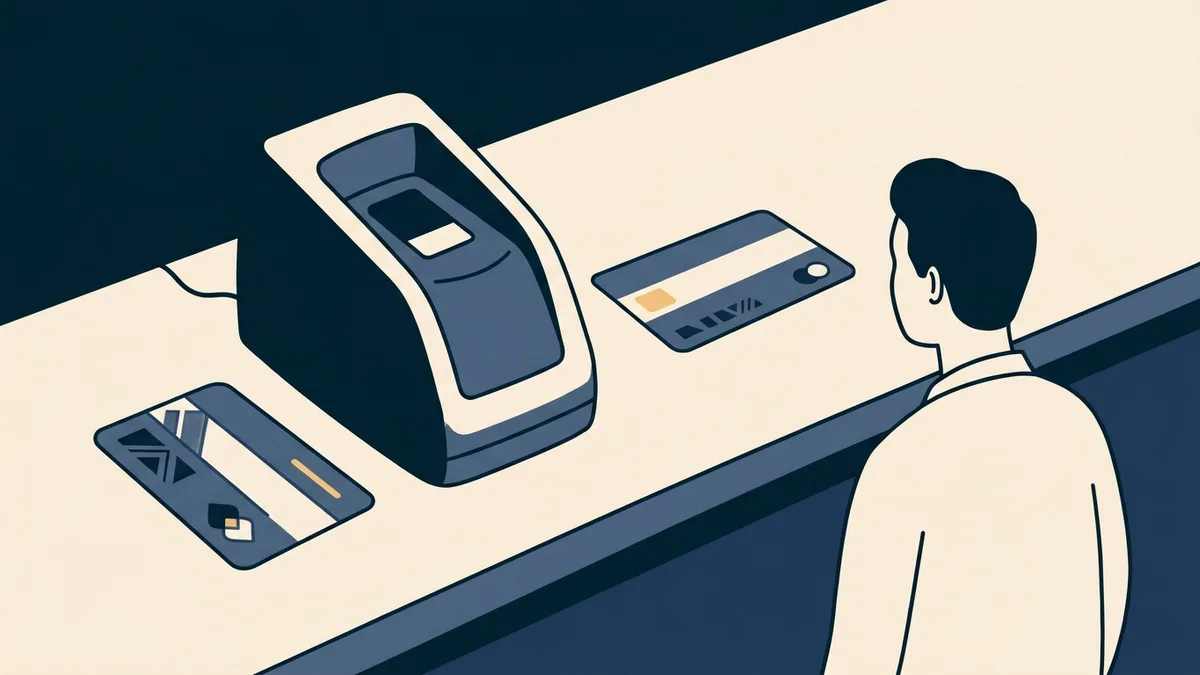
Most states require a fingerprint-based criminal background check for licensure, processed through a designated vendor and returned directly to the board. Results often expire after a set period, so timing matters in both directions.
This is the step most applicants treat as trivial, and it mostly is. The two ways it goes wrong are both about timing rather than about anything in the record.
How it works
The state designates a vendor, you schedule an appointment, your prints are captured electronically and submitted to the state police and usually the FBI, and the results are returned directly to the board rather than to you. You generally never see them.
The board is looking for anything requiring disclosure and explanation, not for perfection. Old offenses, particularly ones unrelated to clinical practice, are routinely cleared.
The two timing traps
The first is starting too late. Fingerprinting is within your control, unlike primary source verification, so it should run in parallel with the steps that are not. An applicant who waits until the verification lands has added two or three weeks to the end of the process for no reason.
The second is starting too early. Many states will not accept results older than a defined window, and a check completed before you actually filed can expire while the rest of the file assembles. Paying twice for the same prints is an avoidable and irritating expense.
The safe sequence is to confirm the validity window first, then schedule so the results land shortly after your application is filed rather than well before it.
Disclosure
Whatever is in your record, disclose it on the application. The check will surface it, and every board treats a discrepancy between what you reported and what the report shows as a separate and more serious problem than the underlying matter.
This holds for old, minor and resolved items, and for anything expunged that the application form still asks about, which many do in explicit terms. If you are unsure whether something needs disclosing, disclose it with a short factual explanation. Boards are used to reading these and the explanation costs you nothing.
Vendors, appointments and practical friction
States designate a specific vendor, and you generally cannot use another. Some run their own capture sites, some contract with a national provider that operates inside shipping stores and other retail locations, and a few still accept ink cards mailed in.
Availability varies enormously by geography. Applicants in metropolitan areas often book within days; those in rural areas sometimes drive a considerable distance or wait weeks for an appointment. If you are relocating, this is a reason to check appointment availability in the destination before assuming the step is quick.
You will usually need a registration or transaction number from the board before the vendor can process you, because that number routes the results to the right recipient. Turning up without it wastes the appointment, and this is the single most common practical failure in the step.
When you already live out of state
Applicants frequently need prints taken for a state they do not yet live in, which the designated vendor may not support remotely.
Most states have a documented process for out-of-state applicants, commonly an ink card taken at a local police department and mailed to the state agency, sometimes with a separate form and a different fee. It is slower than electronic capture, often by two or three weeks, and it needs to be started correspondingly earlier.
Ask the board specifically how out-of-state applicants are handled rather than following the general instructions on the vendor page, which are usually written for residents.
Common questions
- Can I reuse a background check from another state?
- Almost never. Results are returned to the requesting board and are not transferable, so each state generally requires its own.
- How long do results stay valid?
- Commonly somewhere between sixty days and a year depending on the state. Check before scheduling, because an expired check has to be redone at full cost.
- Will an old arrest block a license?
- Not usually by itself. Boards weigh the offense, how long ago it was and its relationship to practice. Disclosing it is what matters.
Need Help with Your Application?
We handle the MFT licensure process end-to-end — eligibility screening, documents, board follow-ups, and tracking.