
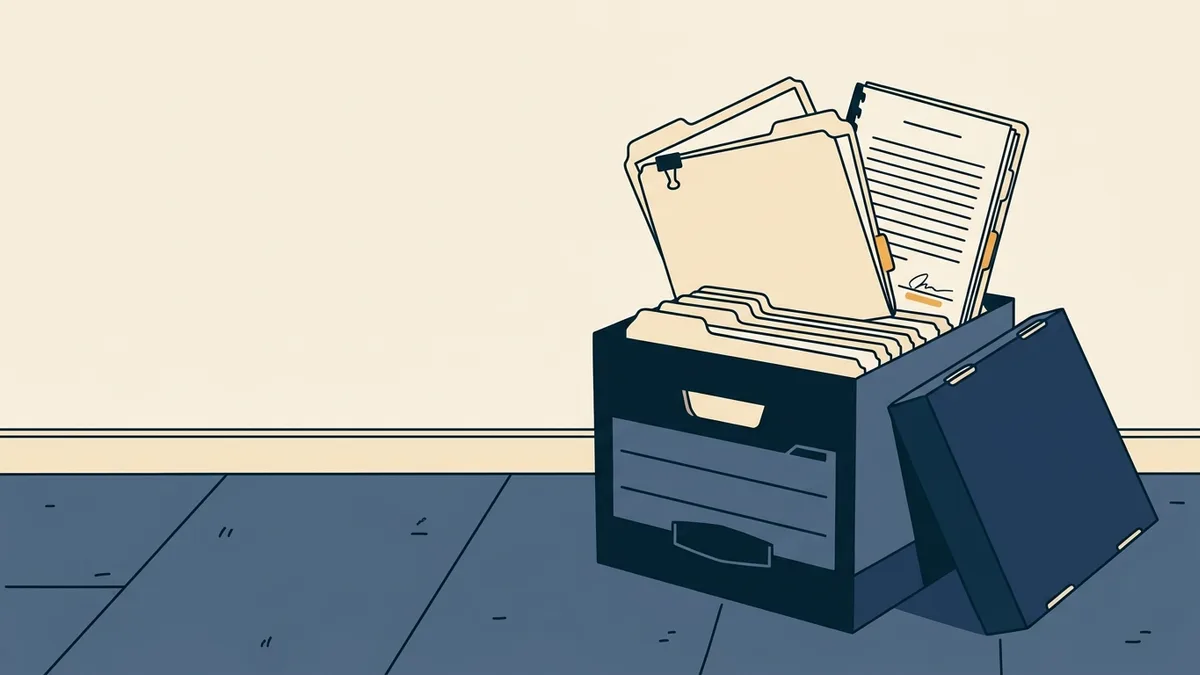
States that have not adopted streamlined endorsement may require documentation of postgraduate supervised hours, including the ratio of individual to group supervision and verification from the supervisor. Reconstructing this years later is the most common reason an endorsement application fails.
Ask a therapist who has completed a traditional endorsement application what the worst part was, and the answer is almost never the fee, the forms or the waiting. It is proving something about 2013.
What is actually being asked
A board wanting supervised experience documentation typically wants more than a total. It wants the number of postgraduate clinical hours, the number of those that were direct client contact, the number of supervision hours, and the split between individual and group supervision, often expressed as a required ratio such as one hour of supervision for every five or ten client hours.
It wants the dates over which the hours were accumulated, because most states impose both a minimum period and a maximum, meaning hours earned too quickly or spread too thinly may not count. It wants the supervisor's name, license number and status at the time, which matters because a supervisor unlicensed or unapproved during the period can invalidate everything accumulated under them.
And it usually wants this attested by the supervisor personally, on the board's own form, signed.
Why this ages so badly
Every element of that becomes harder with time, and they compound.
Supervisors retire, move, change names, leave the profession, and die. Agencies close, merge, or are acquired, and their records go into storage or a system nobody can access. Electronic health record platforms are replaced and old data is migrated partially or not at all. Personal logs live in notebooks lost across several moves.
The therapist has also usually stopped thinking about it. Once a license issues, supervised hours feel like a closed chapter, so the folder gets thinned in a move eight years later on the reasonable assumption that it will never be needed again.
There is a particular cruelty in the ratio requirement. A therapist may have a clear record of total supervision hours without the individual-versus-group breakdown, because at the time nobody was tracking that distinction and the supervisor certified compliance in aggregate. Reconstructing a split from memory is not documentation, and a board that needs the split cannot accept an estimate.
Working the problem when a state still asks
Start with your own board rather than the new one. The state that licensed you originally reviewed and accepted this evidence once, and its file may still contain the forms your supervisor signed. Boards vary in how long they retain application materials, but many keep them far longer than applicants expect, and a copy from the original file is the cleanest possible answer.
If that fails, work outward through employer human resources records, malpractice carriers who may have collected supervision details, and the training program if the hours were part of a structured postgraduate placement.
If the supervisor is genuinely unreachable, contact the receiving board before assembling anything. Most have a documented alternative path, typically an affidavit from the applicant supported by whatever contemporaneous records exist. Boards deal with this regularly and are usually more flexible than their forms suggest, but only if you ask before submitting an incomplete file rather than after.
Why the model law targets exactly this
The seventeen adopting states stop asking, and the reasoning is straightforward. A therapist holding an unrestricted independent license in another state has already had these hours reviewed and accepted by a board applying its own standards. Asking a second board to audit the same facts a decade later, from worse records, produces the same answer at considerable expense to everyone.
The license becomes the evidence. That single change is what turns a three-month endorsement application into a three-week one, and it is the strongest practical argument for choosing an adopting state when you have a genuine choice about where to go next.
What to do now, regardless
Whatever your current situation, digitize what you still hold. Scan the signed supervision forms, the approval letters, the logs, and store them somewhere permanent with your license certificates.
The states you might apply to in fifteen years are unknowable today, and the records are only ever going to get harder to reproduce. This is ten minutes of work now against a genuine risk of an unrecoverable gap later.
Common questions
- What if my supervisor has died or cannot be found?
- Most boards accept an alternative: employer records, the original approval letter, or an affidavit from you supported by whatever contemporaneous documentation exists. Contact the board before assuming you are blocked.
- Do hours from another state count?
- Generally yes if they met the standard in force where they were earned, but some boards apply their own ratios retroactively, which is where applications get caught.
- Why do adopting states stop asking?
- Because your existing license is already proof that a board reviewed and accepted those hours. Re-auditing them years later produces the same answer at considerable cost.
- Should I keep these records after licensure?
- Yes, indefinitely. The cost of storage is nothing against the cost of reconstruction, and you cannot know now which states you will apply to later.
Need Help with Your Application?
We handle the MFT licensure process end-to-end — eligibility screening, documents, board follow-ups, and tracking.